 中文
中文



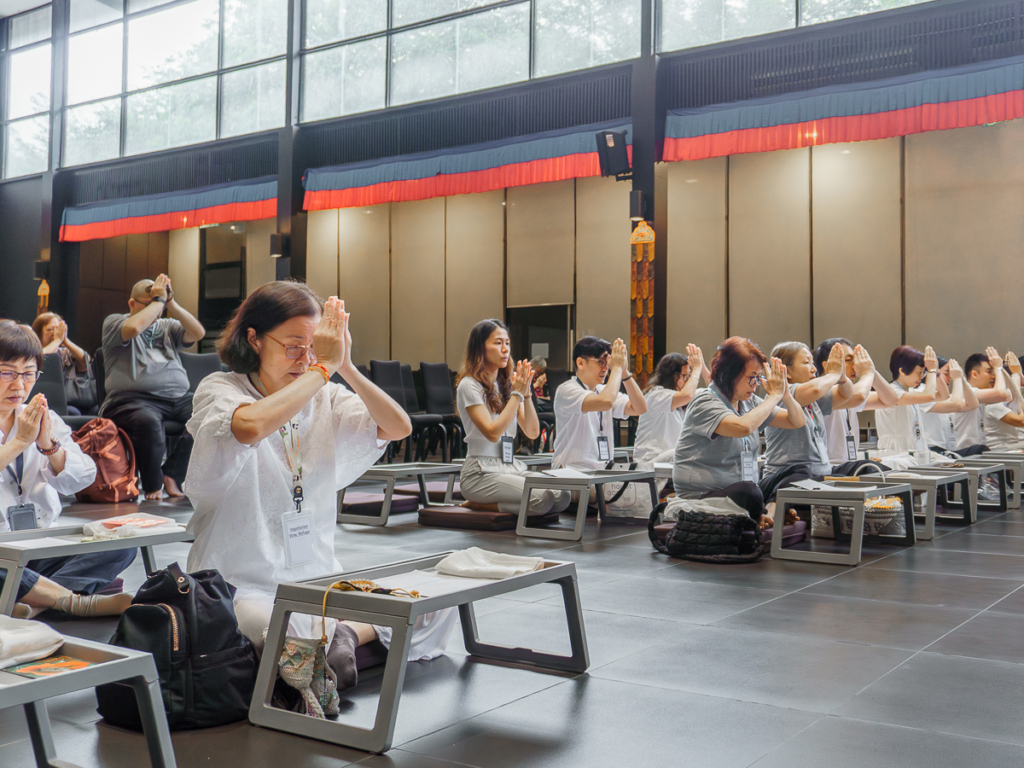
Taking refuge in the Three Jewels — the Buddha, Dharma, and Sangha — is one of the most important steps on the Buddhist path. When we take refuge, we contemplate the qualities of the Buddha, the Dharma, and the Sangha, and in doing so, we develop and deepen our faith in them.
Traditionally, taking refuge involves receiving vows and commitments in a formal ceremony. It is important to know and understand the refuge vows and commitments well so that you can hold them with conviction. They are listed at the bottom of this page.
Benefits of Taking Refuge
The benefits of taking refuge are numerous and extend far beyond one lifetime.
- We formally become a Buddhist.
- We eliminate the indecision and confusion that can arise from uncertainty about our spiritual path.
- We receive the blessings and protection of the Three Jewels.
- We plant Dharmic seeds and positive imprints in our mind, creating the causes to become good people in the future.
- We establish the foundation for taking all other vows.
- We purify negative karma accumulated in the past.
- We quickly accumulate positive potential (merit) every day.
- We are held back from falling into unfortunate rebirths.
- Our virtuous aspirations will be fulfilled.
- We can ultimately attain Buddhahood.
General guidelines
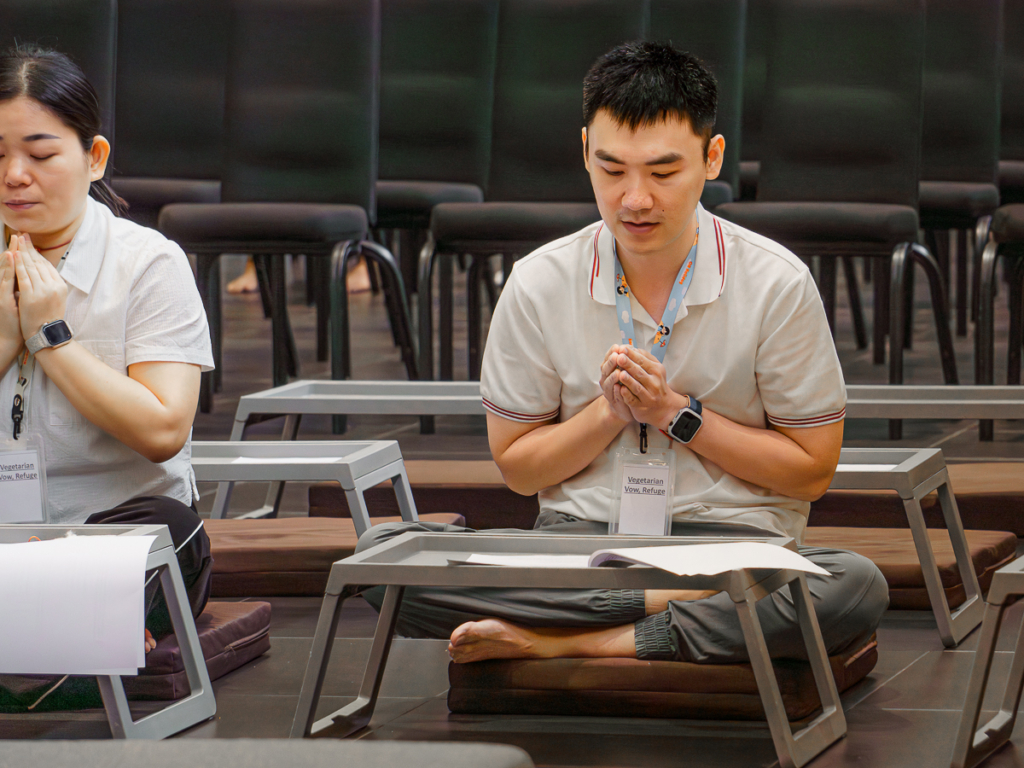
People who are interested to formally take refuge are required to attend a briefing. The briefing explains the preparations required, the prayers involved, and provides an opportunity to address any questions you may have.
Please note that the refuge ceremony is open to members of Kechara who take H.E. Tsem Rinpoche as their root teacher. If you’re not a member, click here to learn more.
Additional preparations
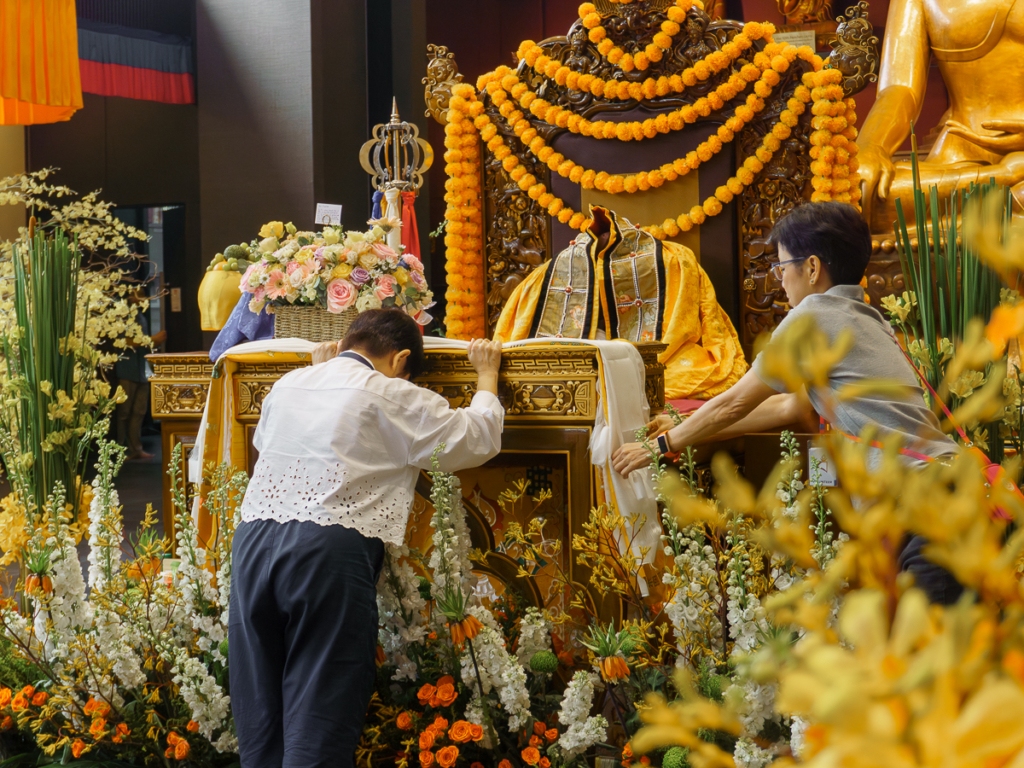
- Offerings to the Lama. One of the causes to receive refuge is to make offerings to the lama. At Kechara, refuge-takers typically offer a bouquet of flowers, a fruit basket, and representations of the Buddha’s body, speech and mind — a Buddha statue or tsatsa, a Dharma text, and a stupa. You may make additional personal offerings if you wish. These items will be offered to the lama on the day of the refuge ceremony.
- Offerings to the Three Jewels. To mark your official entry into Buddhism, refuge-takers also make offerings to the Three Jewels right after the ceremony. These can consist of fruit, candles, flowers or any offering from your heart. They are best offered at the altar on the same day.
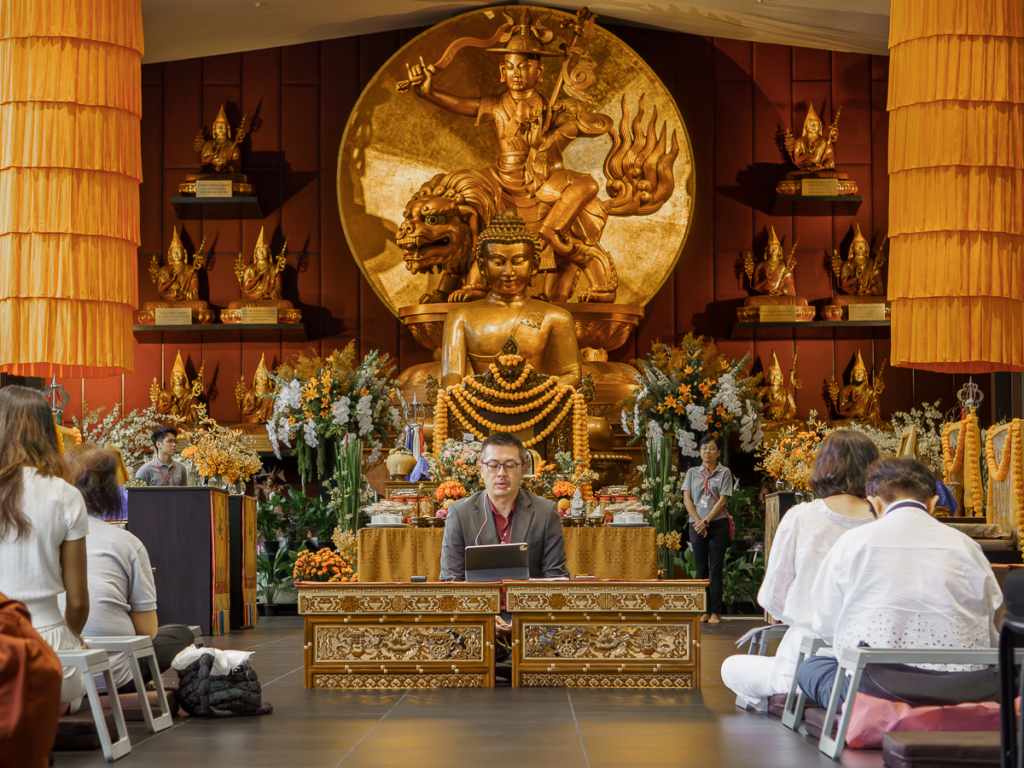
- Dress code. On day of the ceremony, refuge takers are advised to dress in white, smart casual clothing. You will be directed to a special seating area allocated for refuge takers, and the detailed procedure for the ceremony will be explained.
Watch the video below to learn more about taking refuge and the refuge ceremony at Kechara.
When is the ceremony held?
At Kechara, the Refuge Ceremony is conducted annually in conjunction with Wesak Day for auspiciousness. On occasion, it may be conducted on other auspicious dates. For specific cases, ad-hoc refuge may be granted in exceptional circumstances.
If you would like to formally take refuge, please reach out to us by email or WhatsApp. We will be happy to answer any questions you may have and keep you informed of upcoming ceremony dates.
The Refuge Vows, Commitments & Benefits
For reference, the following is a summary of the refuge vows, commitments, and benefits as practised in our tradition. A fuller understanding of these will be provided during the refuge briefing.
The 10 Refuge Vows
The refuge vows are a commitment to refrain from the ten non-virtuous actions:
Three of the Body
- 1. Killing
- 2. Stealing
- 3. Sexual misconduct
Four of the Speech
- 4. Lying
- 5. Divisive speech
- 6. Harsh words
- 7. Idle chatter
Three of the Mind
- 8. Envy
- 9. Hatred and malice
- 10. Wrong views
The 12 Refuge Commitments
- Not to go for refuge to teachers who contradict the Buddha’s view, or to samsaric gods.
- To regard any image of a Buddha as an actual Buddha.
- Not to harm others.
- To regard all Dharma scriptures as the actual Dharma Jewel.
- Not to allow oneself to be influenced by people who reject the Buddha’s teachings.
- To regard anyone who wears the robes of an ordained person as an actual Sangha Jewel.
- To go for refuge to the Three Jewels again and again, remembering their good qualities and the differences between them.
- To offer the first portion of whatever we eat and drink to the Three Jewels, while remembering their kindness.
- With compassion, always encourage others to go for refuge.
- To go for refuge at least three times during the day and three times during the night, remembering the benefits of going for refuge.
- To perform every action with complete trust in the Three Jewels.
- Never to forsake the Three Jewels, even at the cost of our lives, or even as a joke.